The unofficial
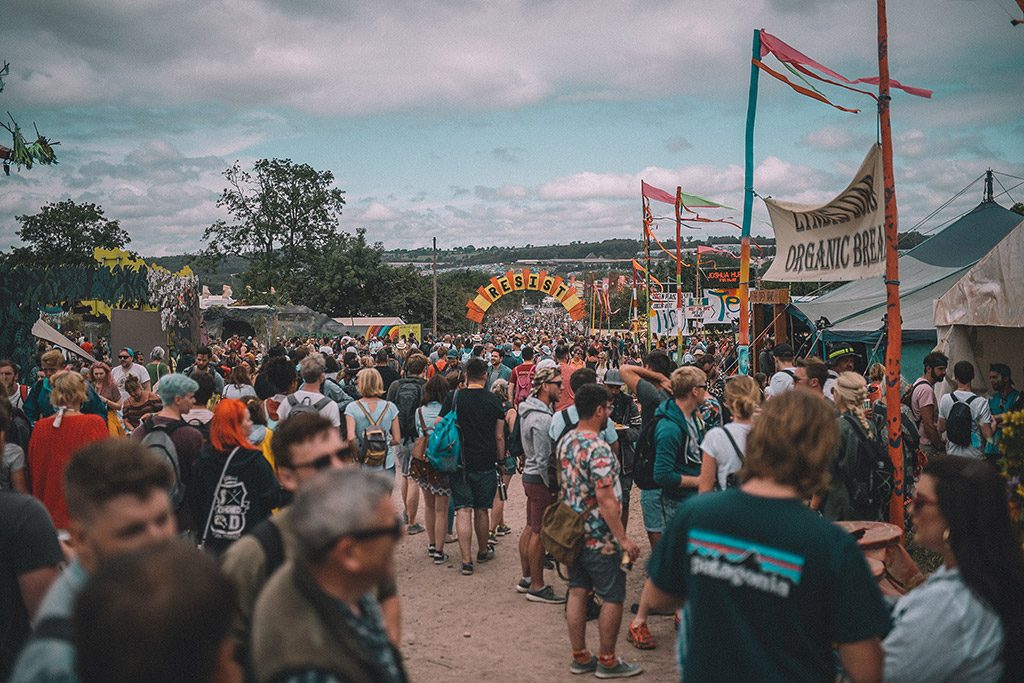
It altered the course of my life.
Jessi got the opportunity to speak to Tom Paine on site during the build at Glastonbury 2023, who has run the Silver Hayes area for the last two festivals, and has worked there ever since the Dance Village days. Hear all about what’s new in the Silver Hayes area this year, from immersive experiences, to new stages, light installations, and some of the top electronic artists in the world.
Recorded in June 2023. Prices, dates and line-ups reflect the conversation at the time.
“Even if you come as a punter for 5 days, it's a really intense place. You know, there's so much going on, there's so much stimulation.”
In this episode Tap a time to jump there
On site with Tom, and where it started for him
Jessi records from the farm during the build, and Tom Paine recalls his first Glastonbury as a teenager and his first year working in the Dance Village.
Team Love and the road to Silver Hayes
How Team Love grew out of a small stage at Glastonbury, how the Dance Tent became Silver Hayes, and the thinking behind the area's identity and new talks stage.
The Levels and everything else that is new
Tom talks through the new main stage, later opening hours, a sound system garden, a mycelium structure and light installations, with a few line-up picks.
Wobbles, looking after crew and a late one
How intense the festival can be for the people building it, the support on offer for crew, and the morning Tom turned up for his shift without having slept.
Read the transcriptAutomatically generated, so it may contain errors.
Jessi Hello and welcome to GlastoCast, the unofficial Glastonbury Festival podcast. Hey everyone, it's Jessi. Um, today's episode is a little different. I am coming to you live, uh, sat in the campervan, uh, on site at Glastonbury Festival 2023. I'm super excited. It's the Monday, the festival is about to kick off, and we are Well, I've just been super lucky to go and do an awesome interview. And yeah, I just wanted to let everybody know that I'm sorry if the audio quality of this episode is not up as up to our usual standards. It's all been recorded on my iPhone. Um, the interview that I did, I had an actual shotgun mic, so quality's a little bit better. But yeah, you might just hear a little bit of background noise and stuff. That's how it is on a festival site. But really excited because we've got a great interview today that we're gonna get out before the festival. It is with the lovely Tom Payne. He was an excellent person to meet. We had a really nice chat, um, and he is one of the directors of Team Love, and which— who look after Silver Hayes. So it's all about Silver Hayes this episode. And yeah, I'll let you listen to the interview now. Thanks guys, and see you on the farm in a few days. Hey everyone, it's Jessi, and I'm actually very nervous because I'm here on site doing my very first on-site interview. with you. I'm sat in the production office of Silver Hayes, and I'm very, very lucky to have been able to get some time with the lovely Tom Payne, who's one of the directors of Team Love and is also one of the area organizers of Silver Hayes as well. So hello, Tom.
Tom Paine Hi, nice to meet you.
Jessi Amazing. So we always seem to start these with just a little bit about you before we get into kind of Silver Hayes, Team Love, and everything you do. So I just wanted to know a little bit about you and like maybe any early years at Glastonbury. How long, you know, what does the festival mean to you? How long you been coming, all that kind of thing?
Tom Paine Uh, so my first, first Glastonbury was 1997. I was 16 years old, uh, and I was inspired by my naughty cousins, my naughty older cousins, which I remind them at family gatherings now that because they used to come in the early '90s and, uh, drive up and park up outside and hop over the fence. And I was obviously a very impressionable 12, 13-year-old boy at this age, and I was like, as soon as I'm old enough to be allowed to you know, or fight, or mates can drive, I'm going to Glastonbury. So did just that. So rocked up in '97, uh, parked, got into the car park, but then met a, met a man outside who sold us a stamp, and as with, as it was back then. And, um, you know, came in and, um, I had my mind and probably the rest of my life totally altered for the best. So, you know, uh, I, I saw, right, you know, saw the kind of seminal Radiohead performance in the Pyramid Stage, and I was young and thin enough to push to the front. So I watched it from like, yeah, literally in front of the Pyramid Stage. Like, I had my mind totally blown, had my tent nicked, had everything inside it nicked. It was obviously a really muddy, wet year. Ended up in the welfare center, got some spare, got given some extra clothes, um, you know, wandered around the kind of, you know, the travelers' fields outside and, and just, yeah, just, just, just took it all in and just left the Do you think that's maybe what sort of inspired you to get into events?
Jessi Was that like the start, do you think?
Tom Paine 100%. Yeah, 100%. I know I'm not just saying this, it totally altered the course of my life, I think, for the better. For the better. So yeah, yeah.
Jessi And then sort of since then, have you got any like standout memorable moments over the years of any stories to tell over the festival years that you've been coming, even before you were working or when you've been working?
Tom Paine So I think my first year working here was 2005, so I came every year since '97. just with friends and, and just that thing. And then, and then it got to the stage where I was kind of starting to look a bit beyond like what was in front of me. I was like, oh, how come those people can go behind there? You know, who are they? What are those people doing behind that tent? Do you know what I mean? Like watching people working and going like, yeah, that's really— you know, I want to be a part of this. So I, I did that. I, I, I, luckily enough, a friend of mine had DJ'd in the dance tent the year before. I think it was 2003 or 2004. whichever one wasn't the year off. And I, uh, I begged. I was like, give me his email, give me, um, who booked you, give me their email. So he gave me Malcolm Haynes's email. He's the guy that started the first ever Dance Tent and Dance Village in Silver Hayes. And, um, so I emailed Malcolm just out of the blue and went, I, I'll come and work for you, you don't need to pay me, I just want to come and work. And, and he was like, cool. And he was Bristol-based and I was in Bristol, so he arranged to meet me in a pub and I had a drink with him and I said like, I love Glastonbury. And he was like, cool, like, you know, you seem, you seem keen, come, come and work. So yeah, so I did my first, first 2 weeks of work then. Um, and I think thinking back, 2005 was also a pretty biblical year in terms of the weather, which is when we had that crazy storm on the Thursday. So I remember standing in the production office, like one of my first ever shifts, as the river burst its bank down the— that runs through, as our production office like literally got the weather. And Lou, who still works here now, was like, right, we need to evacuate this production office. So we evacuated the production office, we had to close the field, you know, we had to sort everything else. The year they had the police divers up at the railway tracks and it was just like, whoa, what have I got myself into? But also, you know, all's well that ends well. We, you know, we survived it, the festival went on, you know, we, we changed and by, you know, from what I remember, by Sunday it kind of got dry again.
Jessi So yeah, pretty baptism of fire if that was your first, like, working at Glastonbury. I love that. So yeah, I guess like maybe tell me a little bit more about Team Love and how that started and what you do, you know, outside of Silver Hayes first, and then we'll—
Tom Paine Well, Team Love was born out of Glastonbury. So basically, having worked for Malcolm for 3 or 4 years, me and my, my business partner Dave, uh, the other half, or the other, one of the other thirds of Team Love, Penny Warner is the final third and most important. Um, so me and Dave, um, had access to this stage. It was like a 360 projection stage, like a little dome tent. So we came to Malcolm, got very excited, and came to Malcolm like, can you let us do— can you let us do this tent? You know, and Matt was like, what do you need? And I was like, well, we need, um, we kind of came, came up with a bit of a figure, and he's like, I've got 5 grand. And we're like, uh, okay, yeah, we'll make it work. And so we, for 5 grand, we brought this tent, we set it all up, we, um, we booked 4 days of music, you know, did everything. And then, and then, so we planned it all out, and then Malcolm was like, well, um, I need a company to to give you this check for? And I was like, we don't, we don't have a company. I was like, well, suggest you set one up. So I was like, right, Dave, what do we call this company? He was like, Team Love. I was like, right, great. So I went to the bank, set up a company called Team Love.
Jessi Amazing.
Tom Paine Yeah, so Glastonbury— so Team Love was born out of Glastonbury. And then we went on to do some other stages, other festivals with Malcolm. We got involved in Secret Garden Party, The Big Chill, um, lots of other ones. And, um, We kind of like— I, I— Dave ran a record label called Future Boogie. I was running a venue, just started running a venue called Motion in Bristol. And, um, so we both had these kind of parallel lives where we're like, I was, I was venue management, he was kind of music and artist management and record management. Um, but then when it all kind of came full circle in 2012 in Bristol, because we just had this like light bulb, we're like, Bristol doesn't have a festival. Why doesn't Bristol have a festival? Let's do it. And with our experience of having worked at Glastonbury, kind of, and probably a bit more confidence than we probably should have had, we're like, yeah, yeah, we'll start a festival. So we, so we started Love Saves the Day and did our first year in 2012 for 9,000 people. Um, somehow got away with it. It was like, it went.
Jessi That's, that's quite a big starting number to be like, should we start a festival? Not for like 500 people and we'll try it out. It's like, no, let's go straight in.
Tom Paine Well, we were doing, we were doing shows at Motion. So we were doing shows with Motion that would, Promotion's a 1,500-capacity club, and, you know, we had a house night that did 1,500, we had a drum and bass night, we had a dubstep night, we had hip-hop night, techno night. I was like, well, if we make these into 6 stages, theoretically we should sell 9,000 tickets. So it was like, that was the logic. I'm like, okay, we'll call that. So we did some planning and then did some maths, and we're like, right, we'll break— if we sell 4,000 tickets, we'll break even. We sold 9,000 tickets and we lost £40,000. So we're like, right. But, you know, between us, we, we, you know, we managed to scrabble the money together and make sure everyone got paid and make sure we came back for next year and sorted our budgets out. Having done that, we're like, right, this is— tickets need to be twice what we charged. And, um, and yeah, and then we've gone on for the rest. So Love Saves Days has been doing 10, 11 years now. Uh, that's grown to 30,000 a day across 2 days in Ashton Court. Uh, we do— then we come to Glastonbury. Obviously the Silver Hayes, which we're really incredibly excited about this year because we've made all these changes. And then in a couple of weeks we'll go out to Croatia. We do a show out there called Love International. And then we come back for Forwards in September, which is also in Bristol, which is a bit more of a kind of like 6 music live bands headliner kind of crowd. And then we finish up the summer, we do a show in West London in Gunnersbury called Waterworks Festival.
Jessi Delphi's been trying to convince me to go to Waterworks. And it clashed, it clashed last year with something I was doing, but I'm going to try and get there this year. Amazing. Um, so I guess, yeah, you, you're already teasing me by saying about all the new things that are going on, so I'm going to come to that differently. But I just wanted to talk a little bit about how Silver Hayes has kind of evolved since— well, obviously it was the Dance Tent, then the Dance Village, then Silver Hayes. So I just wondered if you could kind of talk me through that and then let me know when Team Love kind of got involved with that, like at what point you sort of came in through that.
Tom Paine So I was never involved in working on the dance tent, although I was a raver in the dance tent because that was during my just coming here years. So I think I was involved in the first ever Dance Village, which was 2005. Uh, so I've been involved working in, you know, working in production. Um, in 2008 when we started WOW, I think it was still part of the Dance Village. It was the Igloo actually, it's still part of the Dance Village. And then I think we changed to Silver Hayes in 2008.
Jessi 2008.
Tom Paine 2013. Yeah, because it's the 10th year this year. So 2013 was the first thing coming. So I guess I've been involved all through Silver Hayes, uh, and most, pretty much most of the Dance Village in different formats. Um, but yes, that evolution from the first ever big massive dance tent into then the Dance Village to kind of try and broaden the spectrum of what could be offered, because obviously electronic and dance music is such a broad church, um, to now into Silver Hayes and the 10th year of Silver Hayes and What we're trying to do now, I think, is now holding the baton really and having taken over from Malcolm last year, is right, is try and establish like what the Silver Hayes identity can be and what everything it can be and holistically how it can make Glastonbury Festival even better and offer even more stuff than it already does, which seems impossible, but there's still a few things that we can offer. So yeah, so that's the real, that's the kind of— The aim of it, really.
Jessi Yep, sure. You're leading into so many of my questions. I love this. This is excellent because I was literally going to ask you, like, uh, the next one was gonna be, what would you say are some of the key elements that make this area, like, such a destination to come to in the festival? Everybody talks about how each area at Glastonbury is basically its own festival within a festival, right? But what is it about Silver Hayes that kind of makes it its own beast, I guess?
Tom Paine Well, I think Silver Hayes— I think Dance Vision Silver Hayes originally was like the home of dance in, in the festival and home of electronic And over the years, as naturally other areas have come up and evolved, and you have like Shangri-La, you have Block9, you have Arcadia, that all do amazing electronic music as well with their own identities or ways of doing it. We kind of, over the last few years, we've looked at Silver Hayes and gone, well, what's our angle? What can we offer that doesn't, you know, there's no point us building another fire-breathing spider.
Jessi Yeah.
Tom Paine That's already done very, very well. The festival doesn't need another one.
Jessi Yeah.
Tom Paine How, what can we offer? So we've kind of looked at, I guess we've taken inspiration really from some more kind of like forward-thinking, almost like European festivals and the way that they approach electronic music and dance. And, and certainly we've looked at it, tried to be very quite forward-thinking in terms of like the materials we use when we're building the stages, you know, the mycelium structure we're putting in, adding in like the information stage, having a look at the aesthetics of our stages so that they are, feel like more organic and maybe more abstract and creating a— trying to create an identity of a field where you can come and hang out in the daytime as well as raving at night. So, you know, it's trying to create— and I think it feels this year like we've— I feel like we're beginning to crack it. And it feels like when we walk around now, it's got a nice, you know, even though there's no one here yet apart from crew, it almost feels like it's got a nice atmosphere. And I was like, right, this is great. This is exactly what we wanted to try and achieve.
Jessi Yeah, on my way in I was just looking at all the hammocks and everybody chilling out in the hammocks on their breaks and stuff. I was like, I feel like I could spend an hour here in the middle of the day. Um, yeah, you mentioned the Information Stage. I was going to ask you about that. Well, there's a few different stages I'm going to ask you about, but I saw that on your, um, you know, all the info you put out. But so is that going to be like a bit of a speaker's corner? What's— what— how do you see that going, the Information Stage?
Tom Paine Yeah, so again, holistically looking at what the festival already has and does amazingly well with, like Left Field and, um, yeah, the Speaker Stage and Glastonbury and University of Glastonbury and, and all that in the different areas. We, we wanted to complement that, um, and add to it. And what we felt maybe wasn't getting reached really was maybe a slightly younger audience. Because, you know, when you first get here, you know, we all remember when we were 18, 19, we first came here, you know, you're like, you're not in it. And I've so much love and respect for Billy Bragg, but I, I don't know that anyone's going to go unless it's Billy Bragg. Do you know what I mean? And, and, and, and fair play, I love that area, and, and that area has inspired what we're doing. And, but what we're trying to see is like, well, how do we get a connection to maybe a younger audience or an audience that's more into like dance electronic music? Because we know a lot of these producers and DJs and artists have things to say and have, have other interests outside of music. So, you know, Sherelle with women's football, you know, um, it, it, and how we can link them with, you know, get— so the audience is into Sherelle as a DJ, might be like, God, I didn't really know Sherelle was so active and such a big Arsenal ladies fan and all this stuff. So we're like, okay, well, that's, that's brilliant. Let's put those 2 things together. Let's, let's You know, you know, people are here for 5 days, you know, they're going to want to explore different things and see different things. So, so yeah, it was really trying to come at an angle where we can use— we're kind of quite firm believers in what the positive benefits of communal experiences can be. And it's like, look, we've got 250,000 people together in one place who would never normally be together in one place. Like, how do we create these communal experiences so that people see stuff they wouldn't necessarily see alongside people they wouldn't necessarily be with and hopefully leave with a kind of positive, a shared positive mindset.
Jessi So the, the information stage, I haven't actually— I walked straight here to see you and I haven't actually had a little bimble about yet. Is it a tent or is it like an open stage type device?
Tom Paine It's an outdoor stage. It's like an outdoor timber stage. Um, it's really beautifully, um, designed and engineered actually. And then, um, and then it has like kind of tent bit over, um, over some kind of wooden benches so people can kind of, you know, you don't— it's not like one of those things where you join a talk late and you have to walk to the front. It's so terrible, you know what I mean? It's like people can join and ebb and flow and come and go as they see, really.
Jessi So there's a couple of other stages as well that I want to talk about, but The Levels is obviously one of them. I saw it looming as I was walking over here. It looks very cool. Is that, you know, would you say that's like an evolution of one of the older stages, or is this completely new? You're going in a completely new direction?
Tom Paine The Levels is, um, is replacing the Sonic. Sonic's always been the main stage for, for, for the Silver Hayes field and Dance Village before.
Jessi That was the big tent Yeah, yeah, the Big Tent.
Tom Paine Big Tent. And before that, big— that had a lot of big silver-like saddle spans that were in like a V setup. We wanted to kind of take that to the next level, no pun intended, and, and really kind of work at, um, again, looking at the identity of the field. What is our kind of like, you know, what's our, what's our showstopper? You know, what's the thing that's going to drag the attention? What— how can we really show what we as a, as Team Love and as Silver Hayes, what we can actually bring to the festival? So yeah, we put a lot of thought into what we wanted to do. We decided we wanted to, again, being the history of the dance tent and the dance village, we wanted to build a big nightclub. But we were also like, well, how's it going to work in the daytime? And the nighttime has really got to look aesthetically as beautiful in the daytime and then really come to life in the nighttime. So at the moment, as you walk through in the daytime, it looks really impressive. They've done an amazing job and been inspired by kind of physical nightclub structure designs. But I saw them testing some of the lights on it yesterday and there's only, there's only like half the lights in at the moment. And I was like, this is going to be seriously impressive when we fire it up.
Jessi So amazing. I was gonna say, like, I think, so I haven't been to Love Saves the Day, I'll put my hands up now, but, um, I like, this year I was going to go but I ended up being somewhere else. I don't know if you know, but I have a festival blog as a separate thing to the podcast. Um, so I sent one of my writers to Love Saves the Day, um, he's called Josh, he's lovely, um, and he sent me all the pictures and I'd seen pictures before, but I, one thing I always said about Love Saves the Day to anybody who asked me was that their stages are super impressive and like it's a setup you won't see anywhere else. Like visually it looks really cool. That day-to-night thing I super get as well because, you know, a lot of festivals you see like a stage with some screens at the side and that's it, you know. But I was gonna say what Levels is kind of reminding me of a little bit is that when Icon first came in everyone was like, whoa, it's like just a big thing that you stare and look at. And then the music just kind of enforces it, you know. So I think the open-air thing is, is really, um, sort of taking off, and I think the, you know, the lighting is really gonna elevate that as well. So yeah, I'm really excited for that one. Um, is there anybody on the levels that you're particularly like, I cannot wait for that DJ to play?
Tom Paine Um, who have we got? Um, Nia Archives on the Saturday, I think, is amazing. We, uh, I think she's a real, yeah, breath of fresh air for the whole kind of like dance music drum and bass jungle scene. It's amazing. Um, and Sub Focus on that tip as well. Like, again, legendary drummer-based producer who's having a real moment again at the moment. I'll tell you what, I'll tell you who's really fun that I saw for the first time earlier, later, at the end of last month, is Girls Don't Sink. Have you seen that? In terms of like a party set, like, so in terms of like festival party set, I was like, these, these girls are amazing. They're brilliant. It's so much fun. So yeah, really excited about that. I think our Thursday lineup's amazing. Um, really excited about kind of like all the acts on that. And then Friday we've got obviously like some big hitters in, um, Camelphat and, um, LF System and that kind of like, you know, kind of like tech housey kind of disco.
Jessi Yeah, it's interesting you say Thursday because obviously people are sort of a bit like, don't know what's going to be over. The lineup seems a little bit— so is The Levels, the big one, going to be open on Thursday? Right, that's gonna be good.
Tom Paine Yeah, we've been— one of the things, because Sonic used to have to close at 12:30, right? And one of the things we've worked quite hard at is like, look, it's the big, you know, it's a big huge dance music stage on site, like it can't go off at 12:30. Yeah, it needs to go on till 3 o'clock. So with a little bit of, um, to and froing with, with Glastonbury and the council, we managed to get permission to let it go later. Um, so we're, yeah, really excited. That means it'll also open on Thursday, so that's exciting.
Jessi That's amazing because, yeah, I think we need On Thursday, you need some more big open— basically, I was at The Glade last year on Thursday and it was a nightmare because it was, you know.
Tom Paine Holistically, and, and we're really happy that obviously Gus and me and the council are taking a very sensible view of this, is like, again, holistically, the festival needs more areas to take the pressure off Arcadia, southeast corner, The Glade. We need to be busy. Yeah, we need to be busy because we need to spread the public out. Um, and so hopefully that— and that's one of our main tasks.
Jessi So hopefully That's a lot of it. We've talked to a lot of people recently, and that's kind of something that comes up all the time because you see people moaning online like, oh, why are there so many clashes? Like, all the people I want to see are at the same time. It's like they do that on purpose. Otherwise everyone would be like, I'm— exactly, it would be— exactly, it would be a crowd nightmare of everybody trying to move between these, you know, big ones.
Tom Paine Don't get me wrong, I am as devastated as anyone else that Queens of the Stone Age and Elton John are clashing. I, you know, it's going to be a tough call. Elton's probably going to win it for obvious reasons. But yeah, it It happens to all of us. We've all got to make tough decisions.
Jessi Yeah, we've all had those. I've been having those arguments for a couple of months with my boyfriend, so I totally get it. Um, and what about, uh, the sort of Firmly Rooted sort of sound system? I was reading all about that, you know. Uh, well, it says it in the name, you know, rooted in the sound system culture and stuff. Um, what's the vibe there and how would you describe that to people to go down there?
Tom Paine Yeah, I mean, come and see it. I would say it's a really, uh— we've worked, we've worked really closely with one of the bar companies here as well, so we can integrate a bar into like a garden area, into to a big sound system. So again, it's somewhere hopefully people can come and sit down and relax all day and have a few drinks and listen to, you know, not only listen to the sound system, but obviously what's great about these old kind of heritage sound systems is you properly feel it in your chest as well, you know. And the main kind of ethos around that is a real kind of like a nod to and respect to basically all the sounds that we know and love that have been inspired by the original sound system of the original sound system culture. So anything from like grime, you know, hip-hop, garage, obviously, you know, dubstep, you know, modern dub, um, just, just anything that's taken its roots from it really. So yeah, we're really, um, yeah, that, that's, that's really exciting programming because there's so many amazing young artists playing music now that you wouldn't necessarily think where— you wouldn't necessarily sit to consider where that music's come from. So actually to put it all in one place and go look at what this has inspired and how important it's been to the, the UK music scene, dance music scene. So No, that's the, the idea behind that one.
Jessi Amazing. Um, yeah, okay, so I, um, is there anything else you want to tell me about any of the new sort of areas or stages or anything like that just before? I've got a few more questions for you. I don't want to keep you too long, but just while we're on the stages, is there any other sort of things you want to let us know about?
Tom Paine So the other thing we've, again, trying to, trying to create some identity for the field and try and set us as a kind of really forward-thinking area, uh, we've got this amazing mycelium structure, uh, designed by Si Carroll. Um, who, uh, is one of— was one of the original designers and architectures of a lot of the big Boomtown stages. So the original Lion's Den and stuff like that, he was, he was the designer. Uh, he came to us a couple of years ago and we started— when we first started pitching out ideas that people get to get involved in the field with us, and he was like, I don't want to build a big, you know, I don't want to build another big stage and have to use tons and tons and tons of polystyrene because I hate using it. It's a horrible product. The end of life on it's terrible. And he's like, but I've just been talking to these guys that make this mycelium, which is like fungal roots, uh, which essentially can, can basically replace polystyrene and, and actually be used as a building block and insulation, all this stuff. So yeah, amazingly, we've managed to get some, um, support from the Arts Council and do this whole research, um, and design kind of, um, and development, uh, project using mycelium. So there's a beautiful structure in the middle of the field that I'd love for people to come and check out, and there's loads of information around it as to why done it. And then around that, and that kind of, that's attached to the kind of information area, so the talks and the speakers. And then around that, we've got some really nice, very, very small, compact, but beautiful lighting installations as well. We've got Squid Soup, who a lot of people might know as a partner on Fortet, do a lot of the lighting for Fortet's big shows in Ali Pali. They've come down with a little Squid Soup installation and, and, and there's, you know, sets of music. There's Limbic Cinema, who are Bristol-based audiovisual company who are amazing. They've got a little installation, so there's loads of nice little installations around where hopefully people can come and look in the daytime and again come back in the nighttime and see them all lit up at night and how they work. So yeah.
Jessi I will admit that I have not been down here in the evening for the last couple of Glastonburys, but I've, yeah, been reading up on it and now looking at your lineup there. So you will see me down here, definitely. I will make the mission. I say mission, it's only because I camp on the other side of site, but I, you know, I will be here. What kind of— are there any, like, you know, you're just talking about the mycelium and stuff, and, and I think that's wicked. I'm gonna go and have a look in a minute. Um, but are there any, like, key messages that you are trying to get across this year with the whole area? Is there, like, an overall overarching message or anything like that?
Tom Paine I wouldn't say there's an overarching message. I think there is— we're really trying to, like I say, we're really trying to hone into, like, the core identity of what Silver Hayes is and what Silver Hayes can be. And I think these are the first steps towards it. So hopefully when people come down and walk around the field, and hopefully in the daytime, they'll see the beauty in the structures and what our creative team have worked so hard in creating. And hopefully they'll see all the installations and stuff. And then they're here at nighttime, hopefully again also see them all come to light as the kind of production, tech production teams kick in and all the lighting and really kind of starts to bring these stages to life as well. And then musically, again, we've always tried to really work with kind of really forward-thinking DJs, producers, musicians. We've got a lot of really exciting bands on, certainly on the Lonely Hearts Club kind of in the afternoon each day, which I think are artists that are going to go on to do really big things. So yeah, I think it's all about, I think, kind of like forward-thinking, like a lot of emerging talent and a lot of kind of creativity.
Jessi I think kind of all Yeah, because, um, I read on, on one of your, you know, the big social media posts that went across like 8 different carousels, you know, it was like one big long— that was really cool. Yeah, yeah, I really liked it, I really liked it. But there's a bit in there that, you know, it talks about exploring the future of tomorrow. So I guess that's, you know, what's the future of Silver Hayes and how's that, you know, gonna impact tomorrow, I guess?
Tom Paine Yeah, well, that's it. I think that, that is it. And, you know, I said about earlier, I think really kind of trying to harness like what can— what positivity can be achieved that communal experiences and create— and creativity, positivity out of creativity is like how, you know, we're all here, we're all, we're all trying to like create new things and push the boundaries and also try and improve, you know, our lives, other people's lives, you know, everything. So I think it all ties into one, but sounding like too much of a hippie, but that's why we're all here at the end of the day, isn't it? Because of the hippies.
Jessi Yeah, like a million percent. I love that. That's sort of— I, I think you very eloquently described what I feel whenever I come over from Glastonbury, I'm like, I wish everybody could just be a bit more like this. We could— if you— if we all just tried a bit better, this is what we could all achieve and live like, etc. So I love that. Thank you. Um, I, I just— one question, I guess. Um, are there any sort of challenges that you faced over the years that were particular? You know, were there any years that you had a particular, like, wobble with something that you've, you know, got there in the end? Is there any kind of stories like that you Tell us about.
Tom Paine I think I have a wobble every year. Yeah, I think individually and as a group we have wobbles every year. No, look, Glastonbury's a, uh, uh, a, a pretty intense place, isn't it? For, uh, and you know, we're all here, this big lot of crew are here for, for weeks. Even if you come as a punter for 5 days, it's a really intense place. You know, there's so much going on, there's so much stimulation.
Jessi Yeah.
Tom Paine And it can be, it can be really quite, um, overwhelming sometimes. So I think, yeah, I don't mind. I'd probably have a cry once a year, yeah, but at some point, you know, uh, you know. And I know I've got a friend, one of my best friends is, um, we scattered his ashes at the Stone Circle, um, God, over 20 years ago now. So, you know, I always go up and say hello to him. So Emotionally, is it, you know, it can be a really tough place, but also a really beautiful place. So yeah, I think, um, I, you know, try and, try and talk to that to a lot of people actually, really, just like, especially our crew that come here, especially if it's their first time. It's like, just be aware this can be quite intense. Yeah. And if you find it being intense, like, reach out, come speak to us, take some time off, go for a walk on your own. Do you know what I mean? Because it's, it's a lot. Yeah.
Jessi I've noticed, because I've been Greenpeace, um, the last— this year and then last year, I was really impressed with the sort of— there was a lot of posters around everywhere talking about kind of mental health and, you know, what support is out there for the build crew as it's going along and stuff. So it's, yeah, it's nice to see that it's oversight.
Tom Paine Yeah, I think, I think actually the festival is coming together really positively in that. I think, you know, a lot of the, you know, all the area organizers we know are really good people, so everyone here cares and that shows. And I think also the festival is doing a lot of work trying to bring that all together as well, which is really positive to see.
Jessi Lovely. Well, thank you for that. So we'll end on something fun, I guess. Like, you know, have you got any like fun stories from the past couple of years of something that might have happened? I don't know. I don't know how to phrase that question better, but any little tidbits? We can be less PG. That's totally fine.
Tom Paine So, um, Lou, she keeps popping in and out of the office. I just missed her. But, um, Lou was my boss here, um, uh, when I first started. And I, um, I was thinking I was supposed to be working at 9 in the morning, and I came back in, then walked back to Silver— it was Dance Village back then.
Jessi Mm-hmm.
Tom Paine So I got back in about 7 in the morning. I was like, I've got a couple, I've got a couple hours to sleep before I get to work. And then we went, there was a little like semi-legal, probably illegal pop-up bar, um, set up in the bottom of the camp. And we're like, we just should just step in there for a drink. And we stepped in there and the only other 3 other people in there were Howard Mark and 2 of his mates. And we were like, okay, play cool, play cool, let's help Mark's over there. So we got some drinks, we're like, should we go and sit with them? We're like, no, no, don't, don't go sit with them. And, um, he's like, okay, let's go sit outside. So we went outside and then we sat outside and, um, we're doing the crossword or something and he looked up and heard Mark's there and he's like, do you mind if we join you? And I was like, no, no, join us. So he sat down with us and then it's like, so I was like, right, I'm gonna roll a spliff. So I brought a spliff out. Like, I passed it to Howard Marks, sat up with Howard Marks for 2 hours chatting, and I was looking at my watch. I was like, fuck, it's 9 o'clock in the morning. And I went in, turned up, and Lou was like, have you been to bed? I was like, no. She's like, you should probably go to bed. I'm, I'm actually a bit disappointed in you. And I was like, I'm sorry, Lou. I was like, I've just been sitting up with Howard Marks and I, I wrote him a spliff and passed him a spliff. She was like, okay, you're forgiven. Go, go, go get some sleep and then come back to work. I was like, thanks, Lou.
Jessi Amazing. I love that. Like, of all the people, just be like, uh, I would— I think if I was your manager, I would have said the same. I was like, okay, that's fair enough. Not, not just, oh, I went and sat in the tea tent for 2 hours. It's like, no, I actually had a reason. Okay, awesome. And then just lastly, uh, if you were, uh, say this is a radio advert and you need to sell Silver Hayes to people coming to Glastonbury this year, why should they come down? What's, what's the selling point to them? All right, I mean, apart from everything you've just said, but we're trying to summarize it, I guess.
Tom Paine Okay, so we've got some amazing, huge new stages which hopefully will blow you away. Amazing lineup, amazing artists, really interesting light and art installations, and just places to hang out. And yeah, come check us out.
Jessi Sounds great. All right, thank you so much, Tom. That was amazing, and really, really appreciate your time. And yeah, I'll hanging around. You'll be seeing me over the festival.
Tom Paine Cool, thanks, Jessi.
Miguel What a fantastic interview, and straight from Worthy Farm, a GlastoCast first. So proud of Jessi for making it happen, and thanks, Tom, for chatting with us. Even though I'm not at the festival this year, hearing about Silver Hayes has triggered some serious FOMO. If you're heading to the farm, we want your Glasto moments. Share your journey. Tell us about the queues, your first steps on Worthy Farm, unforgettable performances, surprise acts, or new festival friendships. Tell us about your first time at the Long Drops. Simply head to contribute.glastocast.co.uk to record a voice clip and send it our way whenever the moment takes you. Your Glastonbury, your moments, your stories. We are all ears. To everyone headed to Glastonbury, make the most of the magic. And if you spot Jessi, give her a shout out for me. Thank you, Michael. Until next time, and I wish you unforgettable Glasto moments.
What is your best Silver Hayes memory?
From the old Dance Tent to the stages there now, plenty of us have lost a night in that corner of the site. Tell us about yours.
Tell us in a voice note